
Dwarf Grey Sugar
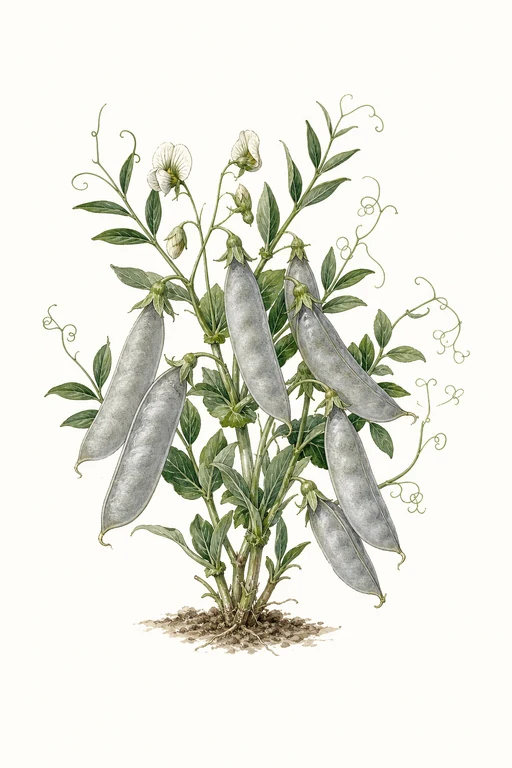
Sweet, cool-crisp pods arrive with a silvery, slate-grey sheen that catches the light as you harvest—tender, snap-forward, and richly aromatic.
Dwarf Grey Sugar forms compact plants with abundant snow-pea pods that stay pleasantly slender and sweet at about 60 days, ideal for fresh, quick stir-ins, light sautéing, and vibrant pickling where their delicate texture shines. Grow this variety for a garden-to-plate favorite that delivers a refined crunch and a clean, pea-sweet finish in every pod.
Light: Full SunMaturity: 60 DaysHabit: Upright
Location not set yet
Location not set yet
Enter your ZIP for local crop dates
Dwarf Grey Sugar Planting Dates by USDA Zone
Estimated US hardiness-zone windows for sow, transplant, and harvest. Enter a US ZIP above for exact local dates, or open a zone below.
| Zone | Start Indoors | Sow / Transplant | Harvest |
|---|---|---|---|
| Zone 1a | Protected Environment Only | ||
| Zone 1b | Direct Sow | Jun 1st | Jul 31st – Aug 1st |
| Zone 2a | Direct Sow | May 25th | Jul 24th – Aug 29th |
| Zone 2b | Direct Sow | May 15th | Jul 14th – Aug 25th |
| Zone 3a | Direct Sow | May 15th | Jul 14th – Sep 1st |
| Zone 3b | Direct Sow | May 19th | Jul 18th – Sep 21st |
| Zone 4a | Direct Sow | May 15th | Jul 14th – Sep 24th |
| Zone 4b | Direct Sow | May 13th | Jul 12th – Sep 27th |
| Zone 5a | Direct Sow | May 8th | Jul 7th – Sep 30th |
| Zone 5b | Direct Sow | May 4th | Jul 3rd – Oct 5th |
| Zone 6a | Direct Sow | May 1st | Jun 30th – Oct 10th |
| Zone 6b | Direct Sow | Apr 25th | Jun 24th – Oct 16th |
| Zone 7a | Direct Sow | Apr 20th | Jun 19th – Oct 20th |
| Zone 7b | Direct Sow | Apr 10th | Jun 9th – Oct 28th |
| Zone 8a | Direct Sow | Apr 1st | May 31st – Nov 5th |
| Zone 8b | Direct Sow | Mar 23rd | May 22nd – Nov 12th |
| Zone 9a | Direct Sow | Mar 6th | May 5th – Nov 26th |
| Zone 9b | Direct Sow | Feb 9th | Apr 10th – Dec 9th |
| Zone 10a | — | Oct 1st | Nov 30th – Feb 28th |
| Zone 10b | — | Oct 1st | Nov 30th – Feb 28th |
| Zone 11a | — | Oct 1st | Nov 30th – Feb 28th |
| Zone 11b | — | Oct 1st | Nov 30th – Feb 28th |
| Zone 12a | — | Oct 1st | Nov 30th – Feb 28th |
| Zone 12b | — | Oct 1st | Nov 30th – Feb 28th |
| Zone 13a | — | Oct 1st | Nov 30th – Feb 28th |
| Zone 13b | — | Oct 1st | Nov 30th – Feb 28th |
Crop Details
| Trait | Value |
|---|---|
| Days to Maturity | 60 |
| Sun Requirements | Full Sun |
| Growth Habit | Upright |
| Support Needed | Trellis |
| Planting Depth | Normal |
| Germination Temp (°F) | 45 |
| Min Soil Temp (°F) | 40 |
| Min Night Temp (°F) | 28 |
| Harden Off (days) | Not Required |
Culinary Notes

Chef's Note
Dwarf Grey Sugar’s snow-pea pods are built for speed: apply heat briefly so the crunch stays intact and the sweetness reads as pea-sugar, not overcooked green. Their slate-grey sheen also hints at a slightly nutty aromatics—great where you want a crisp bite against acid (lemon/vinegar) or salty cheese (feta).

Best Uses
- quick high-heat stir-fries (pods stay slender, snap-forward)
- shaved/whole pod salads with a briny or citrus dressing
- shallow sauté in butter just until glossy, then serve immediately
- rapid pickling for clean tang without turning mushy

Flavor Profile

Frequently Asked Questions
Why are my dwarf grey sugar peas developing powdery spots or yellowing leaves, and what should I do?
How often should I water dwarf grey sugar peas during the main growing phase?
How can I tell when dwarf grey sugar peas are ready to harvest?
Sowing Tips

Transplant Conditions
Wait until soil reaches 40°F and nights stay above 28°F before moving outdoors.
Expert Note

Direct-sow snow peas as soon as soil can be worked and harvest frequently to keep pods sweet and tender.