
Flying Saucer
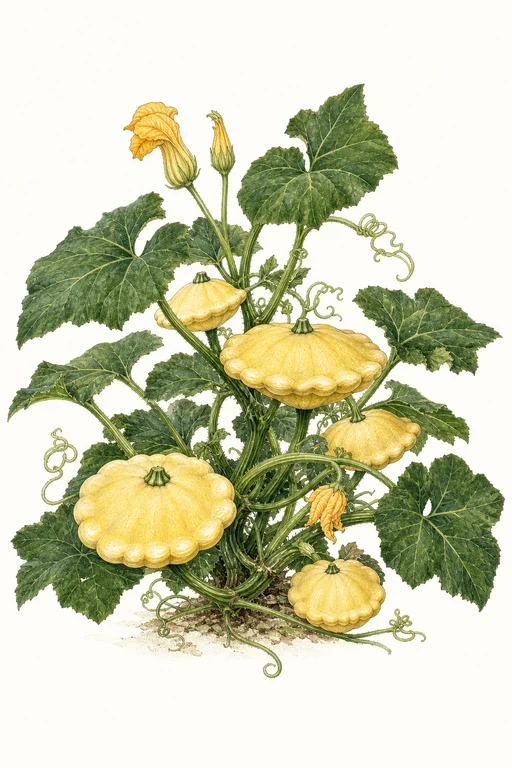
Velvety-smooth, saucer-flat rounds with a gently fluted rim arrive in a vivid, sunlit palette—tender, mild, and delicately sweet with a clean, fresh flavor.
“Flying Saucer” pattypan squash forms compact plants that produce abundant, palm-sized fruits with crisp, fine-grained texture at peak harvest, ideal for quick skillet favorites, roasting, and grilling, as well as bright additions to summer sauces and pickles. Grow it for a steady stream of colorful, easy-to-love squash that look as good as they taste on the plate.
Light: Full SunMaturity: 50 DaysHabit: Vine
Planting schedules and alerts are optimized for Columbus (Zone 6b).
Crop Dates
| Milestone | Date |
|---|---|
| Start Indoors | Apr 11th |
| Last Frost | Apr 25th |
| Transplant / Sow Outdoors | Apr 25th |
| Harvest Begins | Jun 14th |
| Harvest Ends | Oct 16th |
Crop Details
| Trait | Value |
|---|---|
| Days to Maturity | 50 |
| Sun Requirements | Full Sun |
| Growth Habit | Vine |
| Support Needed | None |
| Planting Depth | Normal |
| Germination Temp (°F) | 70 |
| Min Soil Temp (°F) | 65 |
| Min Night Temp (°F) | 55 |
| Harden Off (days) | 10 |
Culinary Notes

Chef's Note
These pattypan rounds are at their best when treated like a quick-cook vegetable: they brown fast, stay snappy, and won’t turn mushy in a skillet. Their mild sweetness plays especially well with sharp lemon and salty cheese—so you get flavor without needing heavy sauce.

Best Uses
- high-heat skillet sauté where the edges brown while the centers stay crisp
- hot roasting or grill—whole or thick rounds—until blistered and caramel-kissed
- quick summer pickles for snap and color that cut through rich foods
- tossed into bright, lightly cooked pasta or yogurt-based sauces

Flavor Profile

Frequently Asked Questions
What pests or diseases commonly hit Cucurbita pepo (Flying Saucer) and how can I stop them early?
How often should I water Flying Saucer (Cucurbita pepo) during the main growing phase?
How do I tell when Flying Saucer squash (Cucurbita pepo) is ready to harvest?
Sowing Tips

Transplant Conditions
Wait until soil reaches 65°F and nights stay above 55°F before moving outdoors. Harden off for 10 days first.

Direct Sow Preferred
Sensitive roots — does not transplant well. If starting indoors, use biodegradable pots and disturb roots as little as possible when moving outdoors.
Expert Note

For compact pattypan growth, keep fruits picked young (about 3–5 inches) to boost continued production.