
Hestia Brussels Sprout
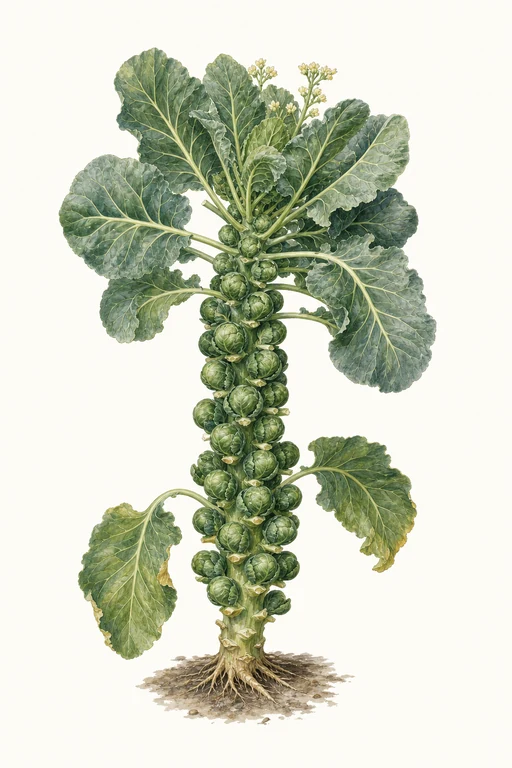
Sweet, nutty sprouts emerge in a tight, velvety crown—Hestia Brussels Sprout develops deep, glossy green buttons with a tender bite and a clean, refined flavor.
On a sturdy stalk, the uniform heads mature over a steady window, making it a standout for gardeners who want reliable harvests and beautiful results. Ideal for roasting and pan-browning, or for brightening into savory sauces and hearty braises, Hestia brings a premium, garden-fresh character to every plate.
Light: Full SunMaturity: 80 DaysHabit: Upright
Planting schedules and alerts are optimized for Columbus (Zone 6b).
Crop Dates
| Milestone | Date |
|---|---|
| Start Indoors | Mar 28th |
| Last Frost | Apr 25th |
| Transplant / Sow Outdoors | Apr 18th |
| Harvest Begins | Jul 7th |
| Harvest Ends | Oct 16th |
Crop Details
| Trait | Value |
|---|---|
| Days to Maturity | 80 |
| Sun Requirements | Full Sun |
| Growth Habit | Upright |
| Support Needed | None |
| Planting Depth | Normal |
| Germination Temp (°F) | 45 |
| Min Soil Temp (°F) | 40 |
| Min Night Temp (°F) | 30 |
| Harden Off (days) | 6 |
Culinary Notes

Chef's Note
Hestia’s uniform, tight crowns lean sweet and nutty rather than harsh, so you can take them hot and fast—roast or pan-sear until the faces caramelize without turning the whole sprout cabbagey. Finish with a hit of lemon and something salty-fat (parmesan or brown butter) to sharpen the clean brassica edge.

Best Uses
- pan-browning or roast so the cut faces crisp while the centers stay tender
- shave or quarter for hot-sautéed bowls with salty fat
- turn into a smooth, savory purée for a silky side or sauce base
- braise briefly with stock and a splash of acid to keep it refined

Flavor Profile

Frequently Asked Questions
How do I manage cabbage worm damage on Brussels sprouts (Brassica oleracea var. gemmifera)?
What watering schedule keeps Brussels sprouts evenly moist through the main growing phase?
When are Brussels sprouts ready to harvest on Brassica oleracea var. gemmifera?
Sowing Tips

Transplant Conditions
Wait until soil reaches 40°F and nights stay above 30°F before moving outdoors. Harden off for 6 days first.
Expert Note

For the sweetest, dense heads, keep soil consistently moist and aim for cool weather—avoid heat spikes that loosen sprouts.