
Italian Pepperoncini
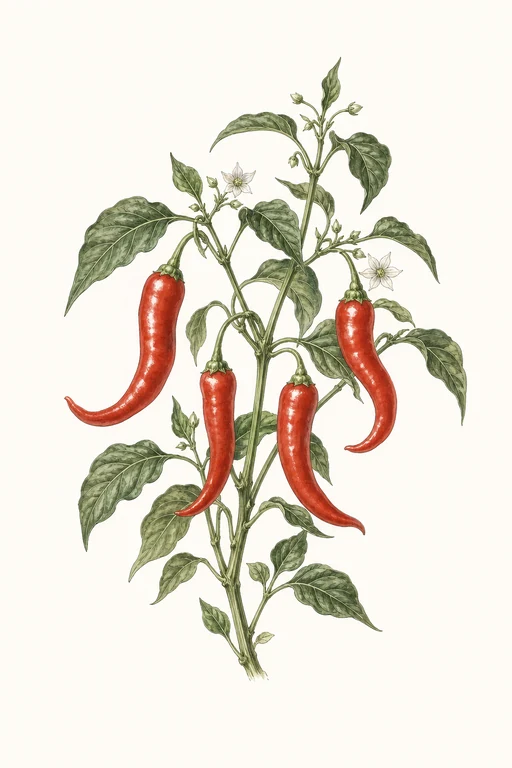
Sweetly fragrant and richly aromatic, Italian Pepperoncini Bull’s Horn peppers ripen to a glossy, warm red with a pleasantly snappy bite and a thin, tender wall.
Their long, gently curved shape is made for roasting over open flame and for fresh snacking, while their bright heat and peppery depth shine in sauces, pickles, and antipasto-style mixes. Grow them for a steady harvest that turns your garden into a living ribbon of color from green to red.
Light: Full SunMaturity: 75 DaysHabit: Bush
Crop Dates : 12a
| Milestone | Date |
|---|---|
| Climate | Frost-Free Climate |
| Growing Approach | Continuous Production |
Crop Details
| Trait | Value |
|---|---|
| Days to Maturity | 75 |
| Sun Requirements | Full Sun |
| Growth Habit | Bush |
| Support Needed | Stake |
| Planting Depth | Normal |
| Germination Temp (°F) | 80 |
| Min Soil Temp (°F) | 60 |
| Min Night Temp (°F) | 50 |
| Harden Off (days) | 10 |
Culinary Notes

Chef's Note
Bull’s Horn pepperoncini stay thin-walled and pleasantly snappy, so they don’t turn to mush when roasted—just blister, char, and turn fragrant. Their bright sweetness plus peppery heat is tailor-made for flame-charred antipasto, quick pickles, and sauces where you want flavor that stays vivid rather than heavy.

Best Uses
- open-flame roast until blistered, then peel and serve as slick antipasto
- quick-pickle for crunchy skewers and sandwich add-ins
- blend into a glossy pepper-forward sauce for pasta or grilled meats
- slice for fresh snacking and chopped salad heat

Flavor Profile

Frequently Asked Questions
Italian Pepperoncini (Capsicum annuum) — what pest or disease is most likely, and what should I do?
How often should I water Italian Pepperoncini during the main growing phase?
When are Italian Pepperoncini ready to harvest?
Sowing Tips

Transplant Conditions
Wait until soil reaches 60°F and nights stay above 50°F before moving outdoors. Harden off for 10 days first.
Expert Note

Start pepperoncini indoors early under steady warmth, then transplant only once soil is reliably warm (about 60°F+) and nights are consistently above ~50°F to avoid cold-stunting.