
White Cannellini
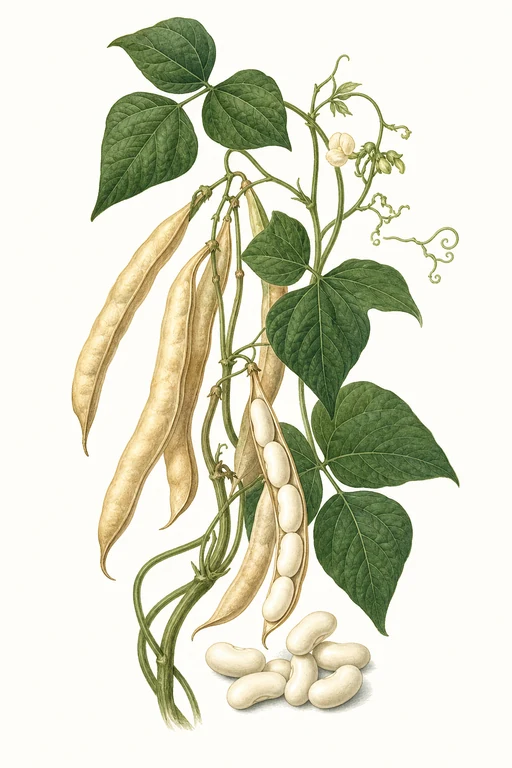
Silky, ivory-white beans—clean as candlelight—promise a calm, nutty depth when you’re ready to savor their slow-cooked richness.
White Cannellini forms an even, uniform harvest of dry seed with a smooth, firm texture that holds its shape beautifully, making it a favorite for hearty pots and classic bean-forward dishes. Grow with confidence for a dependable 85-day rhythm and a pantry-worthy yield that feels as satisfying to grow as it is to enjoy.
Light: Full SunMaturity: 85 DaysHabit: Bush
Location not set yet
Location not set yet
Enter your ZIP for local crop dates
White Cannellini Planting Dates by USDA Zone
Estimated US hardiness-zone windows for sow, transplant, and harvest. Enter a US ZIP above for exact local dates, or open a zone below.
| Zone | Start Indoors | Sow / Transplant | Harvest |
|---|---|---|---|
| Zone 1a | Protected Environment Only | ||
| Zone 1b | Protected Environment Only | ||
| Zone 2a | Direct Sow | May 25th | Aug 18th – Aug 29th |
| Zone 2b | Direct Sow | May 15th | Aug 8th – Aug 25th |
| Zone 3a | Direct Sow | May 15th | Aug 8th – Sep 1st |
| Zone 3b | Direct Sow | May 19th | Aug 12th – Sep 21st |
| Zone 4a | Direct Sow | May 15th | Aug 8th – Sep 24th |
| Zone 4b | Direct Sow | May 13th | Aug 6th – Sep 27th |
| Zone 5a | Direct Sow | May 8th | Aug 1st – Sep 30th |
| Zone 5b | Direct Sow | May 4th | Jul 28th – Oct 5th |
| Zone 6a | Direct Sow | May 1st | Jul 25th – Oct 10th |
| Zone 6b | Direct Sow | Apr 25th | Jul 19th – Oct 16th |
| Zone 7a | Direct Sow | Apr 20th | Jul 14th – Oct 20th |
| Zone 7b | Direct Sow | Apr 10th | Jul 4th – Oct 28th |
| Zone 8a | Direct Sow | Apr 1st | Jun 25th – Nov 5th |
| Zone 8b | Direct Sow | Mar 23rd | Jun 16th – Nov 12th |
| Zone 9a | Direct Sow | Mar 6th | May 30th – Nov 26th |
| Zone 9b | Direct Sow | Feb 9th | May 5th – Dec 9th |
| Zone 10a | — | Oct 1st | Dec 25th – Feb 28th |
| Zone 10b | — | Oct 1st | Dec 25th – Feb 28th |
| Zone 11a | — | Oct 1st | Dec 25th – Feb 28th |
| Zone 11b | — | Oct 1st | Dec 25th – Feb 28th |
| Zone 12a | — | Oct 1st | Dec 25th – Feb 28th |
| Zone 12b | — | Oct 1st | Dec 25th – Feb 28th |
| Zone 13a | — | Oct 1st | Dec 25th – Feb 28th |
| Zone 13b | — | Oct 1st | Dec 25th – Feb 28th |
Crop Details
| Trait | Value |
|---|---|
| Days to Maturity | 85 |
| Sun Requirements | Full Sun |
| Growth Habit | Bush |
| Support Needed | None |
| Planting Depth | Normal |
| Germination Temp (°F) | 70 |
| Min Soil Temp (°F) | 60 |
| Min Night Temp (°F) | 50 |
| Harden Off (days) | Not Required |
Culinary Notes

Chef's Note
Cannellini’s advantage is texture control: simmer them gently and they go creamy without fully collapsing, so you get a spoonable pot with intact beans. Their mild nuttiness plays especially well with assertive fats and aromatics—olive oil, garlic, and herbs—so the whole dish tastes composed, not muddled.

Best Uses
- slow-cooked white bean stew with aromatics
- silky bean purée for crostini or sandwich spread
- Tuscan-style beans with olive oil, garlic, and herbs
- bean salad dressed warm so the skins relax without turning mushy

Flavor Profile

Frequently Asked Questions
What pest or disease commonly affects Phaseolus vulgaris (white cannellini) and what should I do?
How often should I water white cannellini during the main growing phase?
How do I tell when Phaseolus vulgaris (white cannellini) is ready to harvest?
Sowing Tips

Transplant Conditions
Wait until soil reaches 60°F and nights stay above 50°F before moving outdoors.
Expert Note

Plant when soil has warmed to reliably warm conditions, and avoid moving plants—beans set best with minimal root disturbance.