
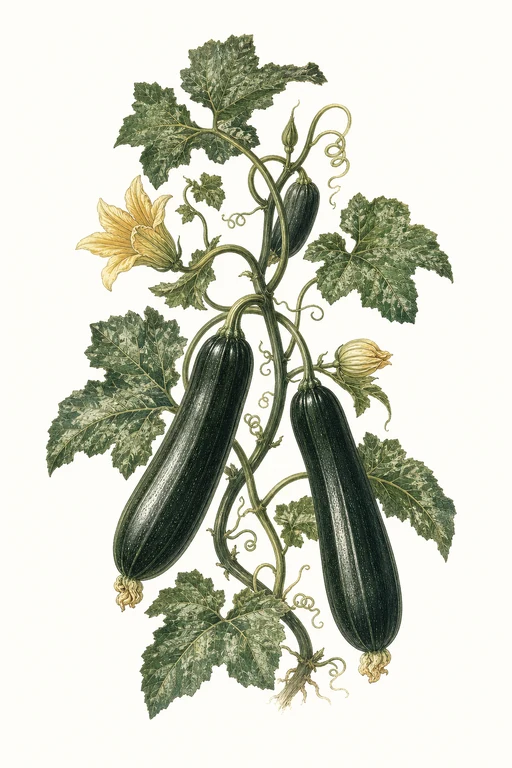
Zucchino Rampicante
Sun-warmed and richly flavored, Zucchino Rampicante delivers tender, garden-fresh zucchini with a smooth, dark-green sheen and a pleasantly delicate bite.
Its climbing habit brings an elegant, space-smart abundance, producing slender-to-medium fruits that stay crisp and flavorful for weeks. Ideal for grilling, sautéing, and fresh preparations, these zucchini also shine when sliced for quick pickles and vibrant sauces.
Light: Full SunMaturity: 50 DaysHabit: Vine
Crop Dates : 3a
| Milestone | Date |
|---|---|
| Start Indoors | Direct Sow |
| Last Frost | May 15th |
| Transplant / Sow Outdoors | May 29th |
| Harvest Begins | Jul 18th |
| Harvest Ends | Sep 1st |
Crop Details
| Trait | Value |
|---|---|
| Days to Maturity | 50 |
| Sun Requirements | Full Sun |
| Growth Habit | Vine |
| Support Needed | Trellis |
| Planting Depth | Normal |
| Germination Temp (°F) | 75 |
| Min Soil Temp (°F) | 65 |
| Min Night Temp (°F) | 55 |
| Harden Off (days) | 10 |
Culinary Notes

Chef's Note
Zucchino Rampicante is the zucchini that stays pleasantly crisp rather than collapsing into watery ribbons, so it holds up to direct heat and quick sauces. Use it hot and fast—grill/sauté or pickle—then finish with acid and salty cheese so the mild squash flavor really pops.

Best Uses
- high-heat grill or cast-iron sear—slice lengthwise for charred edges and juicy centers
- quick sauté with garlic and lemon to keep it bright and not watery
- thin rounds for fast pickles that stay crisp
- blending into a glossy summer sauce (use a quick reduction so it coats, not steams)

Flavor Profile

Frequently Asked Questions
What pest or disease commonly affects Cucurbita pepo (zucchino rampicante), and how can I control it?
How often should I water Cucurbita pepo during the main growing phase, and what soil moisture should I maintain?
How do I know when zucchino rampicante (Cucurbita pepo) is ready to harvest?
Sowing Tips

Transplant Conditions
Wait until soil reaches 65°F and nights stay above 55°F before moving outdoors. Harden off for 10 days first.

Direct Sow Preferred
Sensitive roots — does not transplant well. If starting indoors, use biodegradable pots and disturb roots as little as possible when moving outdoors.
Expert Note

For climbing Tromboncino, plant for airflow (space + a trellis) and harvest small to keep fruits tender.