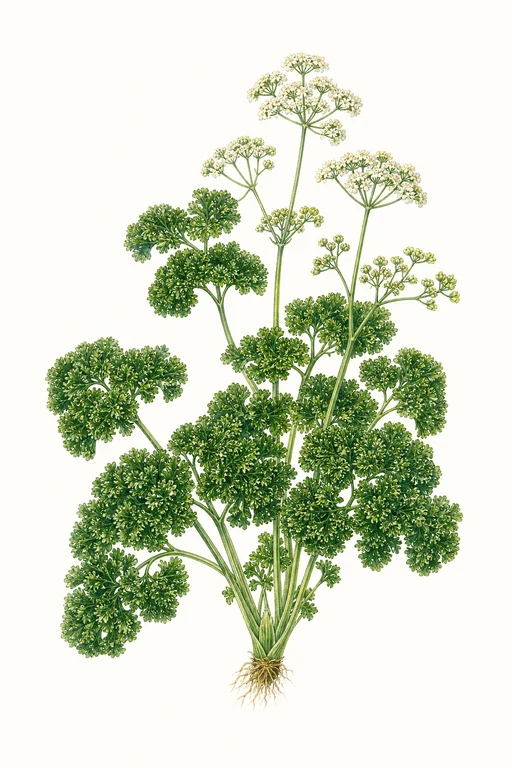
Triple Curled
Parsley
🌱 70d to harvest
Upright
Fragrant, bright-green fronds unfurl with a signature triple curl—crisp, finely textured, and richly aromatic from first harvest …
Crop Dates
| Milestone | Date |
|---|---|
| Start Indoors | Direct Sow |
| Last Frost | Jan 16th |
| Transplant / Sow Outdoors | Jan 16th |
| Harvest Begins | Mar 27th |
| Harvest Ends | Dec 19th |
Crop Details
| Trait | Value |
|---|---|
| Days to Maturity | 70 |
| Sun Requirements | Part Sun |
| Growth Habit | Upright |
| Support Needed | None |
| Planting Depth | Normal |
| Germination Temp (°F) | 70 |
| Min Soil Temp (°F) | 45 |
| Min Night Temp (°F) | 28 |
| Harden Off (days) | Not Required |
Recommended Companions
Frequently Asked Questions
What pest or disease commonly affects Petroselinum crispum (triple curled parsley), and how can I control it?
Parsley (Petroselinum crispum) is prone to fungal leaf spots such as Cercospora, which show as brown to dark spots that spread under humid conditions. Improve airflow by spacing plants and watering at the soil line (not the leaves), then remove heavily spotted foliage early. If it keeps recurring, use a labeled fungicide appropriate for edible herbs and repeat according to the label’s intervals.
How often should I water triple curled parsley during its main growing phase, and what soil moisture level should I maintain?
During active growth, keep the soil consistently moist but not waterlogged—aim for damp soil the top 1–2 inches down. Water about 2–3 times per week in warm weather, increasing frequency if the soil dries quickly, and reduce slightly when temperatures cool. Mulch lightly around plants to prevent rapid drying of the shallow parsley roots.
How do I know when triple curled parsley is ready to harvest?
Start harvesting when plants reach about 8–10 inches tall and have multiple fully developed, curled leaf clusters, typically around 60–70 days from sowing. Cut outer stems first near the base so the center can keep producing new growth. For best flavor, harvest in the morning and keep taking small, regular cuts rather than stripping the plant at once.