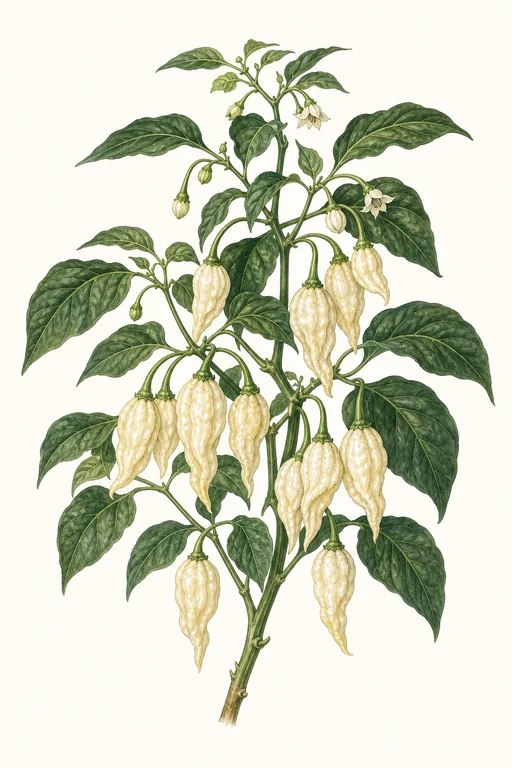
Bhut Jolokia White
Pepper
🌱 120d to harvest
Bush
A slow-building blaze with a bright, floral snap—Bhut Jolokia White brings an arresting, pale ivory-to-cream pepper that glows ag…
Crop Dates
| Milestone | Date |
|---|---|
| Start Indoors | Mar 20th |
| Last Frost | May 15th |
| Transplant / Sow Outdoors | Jul 10th |
| Harvest Begins | Nov 7th |
| Harvest Ends | Aug 25th |
Crop Details
| Trait | Value |
|---|---|
| Days to Maturity | 120 |
| Sun Requirements | Full Sun |
| Growth Habit | Bush |
| Support Needed | Stake |
| Planting Depth | Normal |
| Germination Temp (°F) | 80 |
| Min Soil Temp (°F) | 60 |
| Min Night Temp (°F) | 50 |
| Harden Off (days) | 10 |
Recommended Companions
Frequently Asked Questions
What is the most common disease issue for Capsicum chinense (Bhut Jolokia) and how do I control it?
A frequent problem is blossom-end rot (black, sunken spots on the fruit), usually caused by inconsistent soil moisture and calcium uptake disruption. Keep the soil evenly moist—mulch and water on a steady schedule—then avoid letting the pot/bed swing between drying out and soaking. If you’re growing in containers, ensure calcium isn’t being blocked by very high nitrogen; switch to a balanced fertilizer once plants start flowering.
How often should I water Bhut Jolokia during the main growing phase?
During flowering and fruit set, keep the top 1–2 inches of soil consistently moist, watering deeply when that layer starts to dry. In hot weather, this often means about every 2–4 days outdoors, but containers may need daily checks because they dry faster. Avoid waterlogging—Capsicum chinense roots dislike soggy soil, so water thoroughly and let excess drain.
How can I tell when Bhut Jolokia (Capsicum chinense) is ready to harvest?
Harvest when the pods have fully colored up from green to their mature white/cream stage (follow the color shift typical for your plants) and have firm, glossy skin. Pods are usually ready around 120 days from transplant/growing conditions, but final readiness is judged by color and firmness—not size alone. If you gently tug and the pepper releases easily without tearing the stem, it’s at peak ripeness.