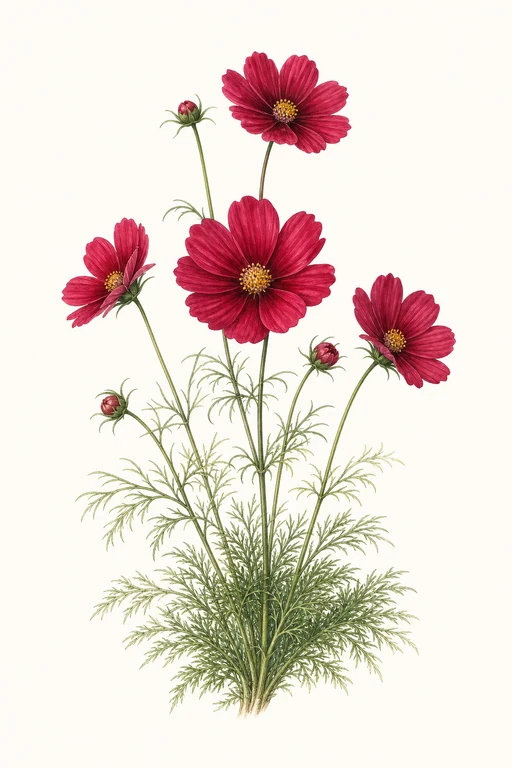
Sonata Carmine
Cosmos
🌱 60d to harvest
Upright
Velvety petals unfurl in a rich carmine blaze, each bloom catching the light like a small, poised firework above finely laced fol…
Crop Dates
| Milestone | Date |
|---|---|
| Start Indoors | Direct Sow |
| Last Frost | May 15th |
| Transplant / Sow Outdoors | May 15th |
| Harvest Begins | Jul 14th |
| Harvest Ends | Aug 25th |
Crop Details
| Trait | Value |
|---|---|
| Days to Maturity | 60 |
| Sun Requirements | Full Sun |
| Growth Habit | Upright |
| Support Needed | None |
| Planting Depth | Surface |
| Germination Temp (°F) | 75 |
| Min Soil Temp (°F) | 60 |
| Min Night Temp (°F) | 50 |
| Harden Off (days) | Not Required |
Recommended Companions
Frequently Asked Questions
Cosmos bipinnatus ‘Sonata Carmine’—what pest or disease is most common, and how do I control it?
A frequent problem is powdery mildew, which shows up as a white, dusty coating on cosmos leaves in warm, humid weather. Improve airflow by thinning crowded plants and water at soil level to keep foliage dry, then remove heavily infected leaves. If it’s spreading, spray with a labeled potassium bicarbonate or sulfur product and reapply as directed on the label.
How often should I water Cosmos bipinnatus ‘Sonata Carmine’ during active growth?
During the main growing phase (from when plants are established until mid-bloom), keep the soil evenly moist but not soggy—aim for about 1 inch of water per week, adjusted for heat and rainfall. Water deeply when the top 1 inch of soil feels dry, since cosmos tolerates brief drought but suffers if roots stay wet. Avoid frequent light sprinkling that keeps the foliage damp and increases mildew risk.
How can I tell when Cosmos bipinnatus ‘Sonata Carmine’ is ready to harvest?
Cosmos flowers are ready for cutting about 60 days after sowing and when the flower heads are fully open with petals in their final color and a firm center. For best vase life, harvest early in the morning and cut stems just above a leaf node to encourage branching and more blooms. If you’re harvesting for seed, wait until the seed heads are dry and tan before collecting.