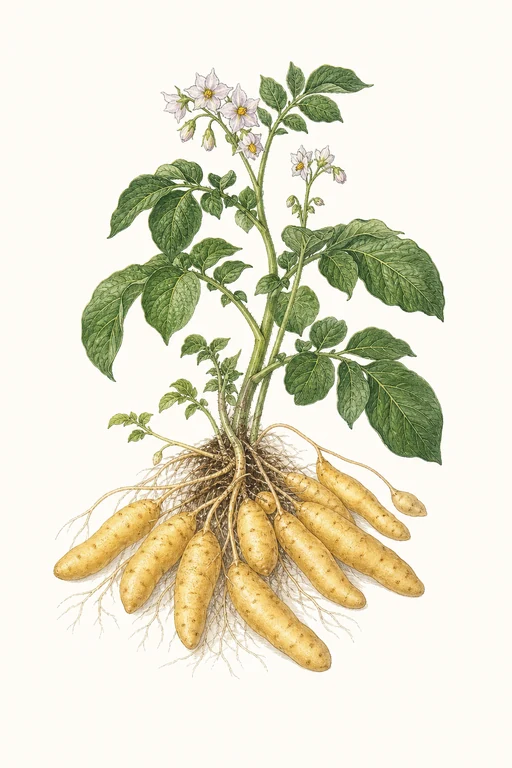
Fingerling
Potato
🌱 95d to harvest
Mounding
Creamy, nutty-sweet flesh with a delicate, velvety bite—Fingerling potatoes bring a gourmet richness to the garden from the first…
Crop Dates
| Milestone | Date |
|---|---|
| Start Indoors | Direct Sow |
| Last Frost | May 8th |
| Transplant / Sow Outdoors | May 8th |
| Harvest Begins | Aug 11th |
| Harvest Ends | Sep 30th |
Crop Details
| Trait | Value |
|---|---|
| Days to Maturity | 95 |
| Sun Requirements | Full Sun |
| Growth Habit | Mounding |
| Support Needed | None |
| Planting Depth | Normal |
| Germination Temp (°F) | 45 |
| Min Soil Temp (°F) | 45 |
| Min Night Temp (°F) | 28 |
| Harden Off (days) | Not Required |
Recommended Companions
Frequently Asked Questions
What pest or disease most commonly affects Solanum tuberosum (fingerling potatoes), and how can I control it?
Fungal late blight and early blight are common on Solanum tuberosum, especially in cool, wet weather—look for leaf spotting that spreads quickly and may cause rapid foliage collapse. Remove and destroy infected leaves, improve airflow by spacing plants, and avoid overhead watering; if conditions stay wet, use a labeled potato fungicide as soon as symptoms appear or as a preventative during prolonged damp spells. Keep tubers from being exposed to light by hilling as the plants grow, since stressed plants are more prone to disease.
How often should I water fingerling potatoes during the main growing phase?
During active tuber formation (roughly mid-season until vines start yellowing), keep the soil evenly moist but not waterlogged—aim for about 1–2 inches of water per week total, adjusting for heat and rainfall. Let the top 1 inch of soil dry slightly between waterings, because consistently soggy beds can reduce tuber quality. After you hill and the canopy fills in, water at the soil level to avoid wetting the foliage.
How can I tell when my fingerling potatoes are ready to harvest?
Harvest when the plants’ foliage begins to yellow and die back, typically around 95 days for Solanum tuberosum fingerlings, but confirm by gently digging one tuber from the hill. The skins should be firm and set (won’t rub off easily), and tubers should be sized for “fingerling” harvest rather than very small. For best storage, cure freshly harvested tubers in a cool, humid, dark place for about 1–2 weeks before long-term storage.