SproutSmart
SproutSmart Intelligent Garden Sowing

Charleston Wakefield

Cabbage

Planting Schedule

Add Charleston Wakefield to your garden to build a schedule and get reminders.
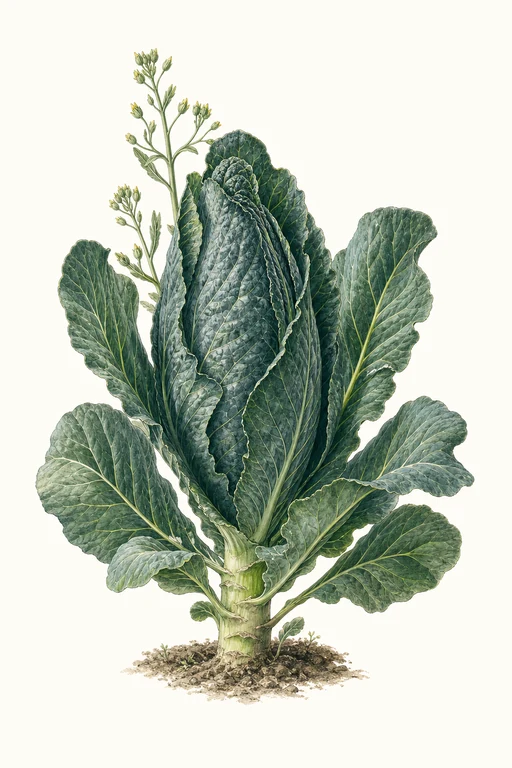
Botanical illustration of Charleston Wakefield
78d to harvest

Sweetly crisp and richly aromatic, Charleston Wakefield forms tight, elongated heads with a cool, blue-green sheen that feels almost velvety to the eye. The flavor is mild and cabbage-forward with a clean snap, making it a standout for fresh slaws and hearty braises, while its dense leaves also shine in tangy ferments and pickles. Grow this classic 78-day favorite for dependable structure, excellent garden presence, and a harvest that stays satisfying from first bite to the last jar.

Crop Dates

MilestoneDate
Start IndoorsMar 4th
Last FrostApr 1st
Transplant / Sow OutdoorsApr 1st
Harvest BeginsJun 18th
Harvest EndsNov 5th

Crop Details

TraitValue
Days to Maturity78
Sun RequirementsFull SunFull sun
Growth HabitRosette
Support NeededNone
Planting DepthNormal
Germination Temp (°F)45
Min Soil Temp (°F)40
Min Night Temp (°F)32
Harden Off (days)6

Frequently Asked Questions


What pest or disease most commonly affects Brassica oleracea var. capitata (Charleston Wakefield) and what should I do?
A very common problem on headed cabbage is cabbage worms (Imported cabbageworm and/or cabbage looper) that chew holes in leaves and can quickly ruin head quality. Inspect undersides weekly and hand-pick early; for control, use Bt (Bacillus thuringiensis) sprays and repeat as label directions require, especially after egg-laying activity. If you see pale, irregular spots and persistent wilting, check for clubroot (soil-borne); remove affected plants and avoid planting Brassicaceae in that bed for several years, and adjust soil pH toward neutral (clubroot is worse in acidic soils).
How often should I water Charleston Wakefield during its main head-forming growth?
During the main growing period (roughly once it begins forming a head), keep the soil consistently moist but not waterlogged—aim for about 1 inch (2.5 cm) of water per week total from rain and irrigation. Water deeply to reach the root zone, then let the top 1 inch (2.5 cm) of soil dry slightly before watering again to reduce disease pressure like head rots. Avoid letting plants swing from dry to very wet, which can stress plants and contribute to uneven head development.
Botanical illustration of Charleston Wakefield

Sweetly crisp and richly aromatic, Charleston Wakefield forms tight, elongated heads with a cool, blue-green sheen that feels almost velvety to the eye. The flavor is mild and cabbage-forward with a clean snap, making it a standout for fresh slaws and hearty braises, while its dense leaves also shine in tangy ferments and pickles. Grow this classic 78-day favorite for dependable structure, excellent garden presence, and a harvest that stays satisfying from first bite to the last jar.